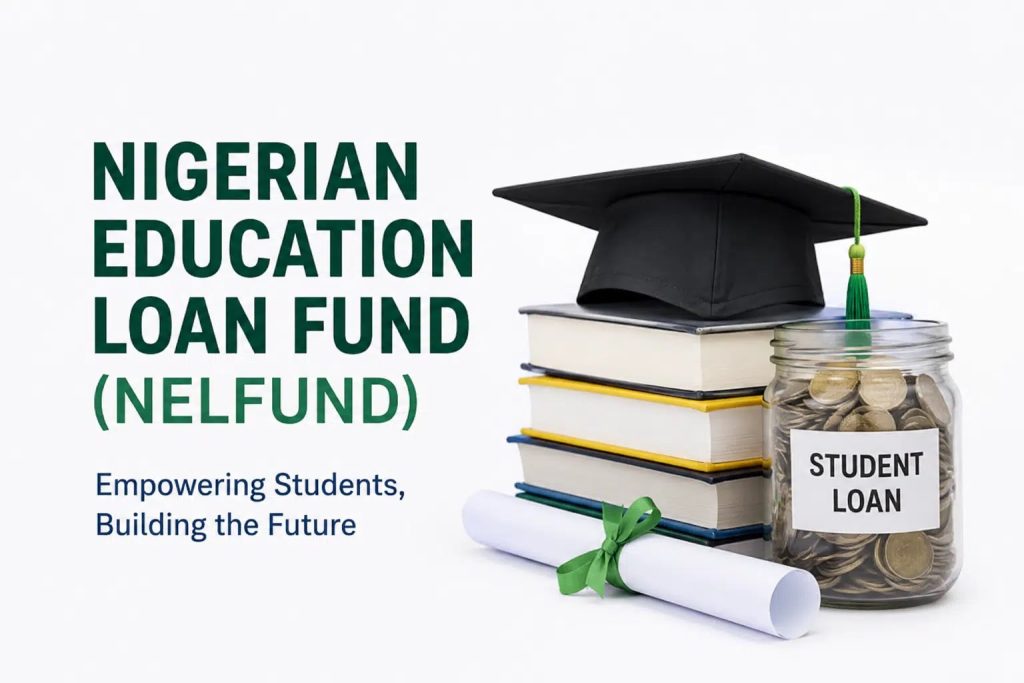

The Nigerian Education Loan Fund (NELFUND) provides interest-free financial support to eligible Nigerian students to help them access higher education. However, many beneficiaries still have questions about repayment, employment requirements, deductions and what happens when they are unable to secure a job after graduation.
To help clear up some of the confusion, here are important facts about the NELFUND student loan scheme and its repayment conditions.
1. The Loan Is Interest-Free
NELFUND describes its student loan as completely interest-free, meaning beneficiaries are not charged interest on the loan. The official student loan portal also confirms that the scheme has no hidden interest charges.
2. Repayment Begins Two Years After NYSC
Beneficiaries who participate in the National Youth Service Corps (NYSC) programme are expected to commence repayment two years after completing their service year. The repayment framework also covers beneficiaries who are exempted from NYSC.
3. Employed Beneficiaries Repay 10% of Their Salary
For beneficiaries in paid employment, 10% of their monthly salary is deducted at source by their employers and remitted to NELFUND.
Self-employed beneficiaries are also required to repay 10% of their monthly profit.
4. Unemployed Beneficiaries Can Apply for an Extension
Beneficiaries who have not secured employment after the stipulated two-year post-NYSC period are not expected to make repayments while they remain unemployed and have no income.
However, they must formally notify NELFUND and provide the required sworn declaration to request an extension.
5. Unemployed Beneficiaries Must Submit an Affidavit Every Three Months
According to NELFUND’s published guidance, beneficiaries who remain unemployed two years after completing NYSC are required to notify the Fund through a sworn court affidavit every three months.
This is important because beneficiaries must continue updating the Fund about their employment status rather than simply ignoring their repayment obligations.
6. Self-Employed Beneficiaries Also Have Repayment Obligations
NELFUND’s repayment framework does not cover only people working for companies or government agencies.
If a beneficiary becomes self-employed, they are required to notify the Fund and remit 10% of their monthly profit. They must also provide the relevant business information within the stipulated period.
7. Repayment Continues Until the Loan Is Settled
The repayment framework provides for monthly deductions or remittances until the outstanding loan is repaid. Beneficiaries can also make voluntary repayments at any time.
It is therefore important to understand that the 10% deduction is a repayment arrangement, not a fixed number of years that automatically clears every beneficiary’s loan.
8. Understand the Consequences of Default
NELFUND’s published guidelines provide for recovery measures where a beneficiary defaults after repayment becomes due. These may include warning notifications, credit restrictions, reporting to credit bureaus and legal action.
Beneficiaries should therefore comply with the repayment conditions and communicate with the Fund if their employment or financial circumstances change.
9. Do Not Assume That Loan Default Has No Legal Consequences
There have been misleading claims circulating online about severe punishment for student loan beneficiaries. However, beneficiaries should not interpret the absence of automatic imprisonment as permission to ignore their obligations.
NELFUND’s guidelines provide for legal recovery measures in cases of default. Beneficiaries should always rely on the actual law, their loan agreement and official NELFUND guidance.
10. Understand the Bank Account Recovery Clause Before Accepting the Loan
One important detail beneficiaries should not overlook is the Global Standing Instruction (GSI).
NELFUND’s published loan terms include consent for the Fund to use legally available recovery methods, including GSI, if a beneficiary fails to repay when the loan becomes due. The terms also state that the Fund may request a bank or financial institution to release available funds from the beneficiary’s account towards the outstanding loan.
This means it would be inaccurate to claim that bank-account recovery can never happen. Beneficiaries should carefully read and understand the loan agreement before accepting it.
Final Advice to NELFUND Beneficiaries
The NELFUND student loan scheme is designed to improve access to higher education by providing financial support to eligible Nigerian students. Although the loan is interest-free and has provisions for unemployed beneficiaries, it remains a loan that must be repaid in accordance with its terms.
Beneficiaries are encouraged to keep their personal and employment information updated, submit the required documents when unemployed, and regularly check official NELFUND communication channels for announcements and opportunities.
Official Website: https://nelf.gov.ng/
Important: Always read the terms and conditions on your personal NELFUND account. The conditions in your signed loan agreement and the Fund’s current official guidelines should take priority over unverified social media posts.